

Before the players hit the ice for the 2026-27 campaign and let their play do the talking, it’s their contracts that tend to garner the most chatter.
As the cliché goes, money talks. And in a swiftly shifting salary cap landscape at a time of great growth in the league, contract conversations are more fascinating than ever.
It’s not just about the series of league-altering, market-setting, history-making deals that have gone down this summer — we’re also seeing a growing trend of stars opting for mid-level term to maximize career earnings, while more and more GMs are buying early on budding talent and signing them to long-term pacts that might look surprising now, but will likely pay off plenty in just a few years.
It all makes for a very interesting time in the NHL.
Yesterday, we kicked off our series with a look at the Pacific Division. Today, we shift to the Central, and examine the most interesting contract on each team in the division.
Chicago Blackhawks: Frank Nazar
A big summer in Chicago brought some notable new contracts, as GM Kyle Davidson acquired and extended Bowen Byram, brought back Patrick Kane on a two-year pact, and locked in five more years of Connor Bedard at $15 million per. All that was made more possible by the extension inked last summer — that one that saw Frank Nazar sign for seven years at just shy of $6.6 million annually.
The two sides agreed to the deal just 56 games into Nazar’s NHL career. That timing made the contract both a giant vote of confidence from the team and an incredibly good value on the future of a centreman who’s poised to outplay that AAV in short order as a key part of the club’s young core.
With the rising cap, and the trend of players prioritizing maximum earning potential on shorter-term deals, Nazar’s pact — and the fact he left money on the table — looks like something of an outlier.
After building on his rookie season with 15 goals and 41 points through 66 games last year, the final season of his entry-level deal, he’s primed for a true breakout campaign. And when those stats pop, the deal is only going to look better and better.
Colorado Avalanche: Martin Necas
So instant, and so seamless, was the fit between Martin Necas and the Colorado Avalanche when the club acquired him via trade in January 2025, management wasted little time inking him to a lucrative extension just 41 games into his Aves tenure.
After signing his eight-year, $92-million extension last October, Necas immediately went about showing us all why he’s a worthy investment. He posted career-highs across the board with his 38-goal, 62-assist, 100-point campaign — all while still playing out the final year of his expiring contract, which counted for just $6.5 million against the cap.
Now, his second full season in Colorado sees him embark on the first year of that eight-year deal, worth $11.5 million annually. The team’s second-highest scorer in 2025-26 is now, fittingly, their second-highest-paid player.
(Cale Makar’s historic extension, and matching $20.5-million cap hit, doesn’t go into effect until July 1.)
What makes Necas’ contract so interesting is not just the heightened expectations that accompany his new paycheque to keep pace with last season’s numbers, which he’s well-situated to meet. It’s also the fact that, as Mikko Rantanen’s replacement, Necas’ productivity and paycheque compare so closely to the man now starring down in Dallas.
Rantanen, the centrepiece of the three-team trade that brought Necas to Colorado in the first place, signed for eight years at $12 million per in Dallas. Signing Necas — two years Rantanen’s junior — for just below that mark and getting slightly more production (1.28 points per game, compared to Rantanen’s similar 1.20) in Year 1 shows us how the Avalanche took a tricky situation when navigating Rantanen’s future and found an ideal solution in Necas.
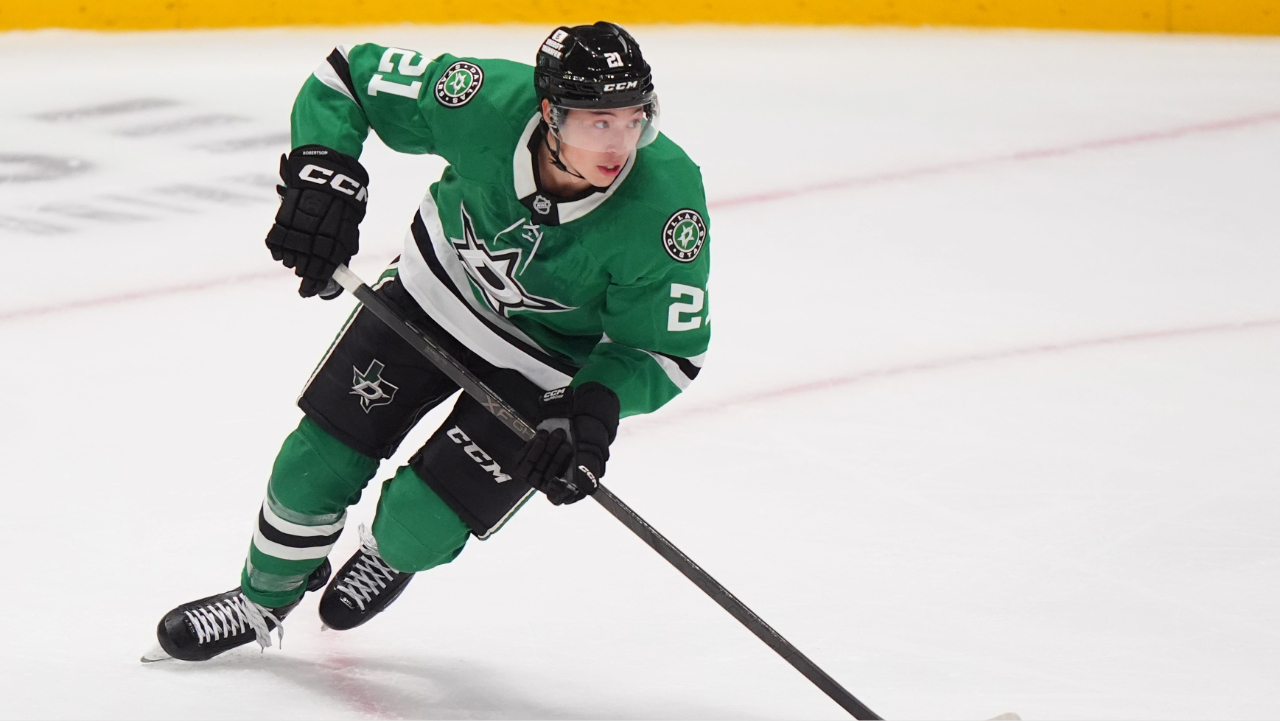
Dallas Stars: Jason Robertson
Obvious? Yes.
Interesting? Very.
After posting 45 goals in a contract year in 2025-26, Jason Robertson’s summer-long contract saga with the Stars was one of the most noteworthy storylines of the off-season — complete with a vetoed trade, a surprising settled-upon AAV and term, and a post-signing press conference that didn’t exactly do much to smooth things over.
Now, Robertson’s one-year, $12-million pact, which walks him straight to unrestricted free agency next July, will be serving up one of the most intriguing storylines of the upcoming season.
Interestingly, Rantanen’s $12-million deal seems to have been a measuring stick in Dallas, too. Word of Stars management not wanting to go over Rantanen’s team-leading AAV factored into speculation around Robertson’s earning potential — and still does, moving forward.
Robertson will be eligible to sign an extension with Dallas on Jan. 1.
Will the two sides decide on a long-term pact then? Or will he skate straight into the open arms of another squad?
He already proved his worth once. Now, he’s got to do it again in his second consecutive contract year with a massive payday on the horizon.
Minnesota Wild: Quinn Hughes
Wow, we really are being creative here, huh? But, like Robertson in Dallas, we can’t look away from the ongoing storyline that is Quinn Hughes’ next contract.
Come to think of it, we can’t really look away from his current deal, either. The six-year, $47.1-million contract he signed in Vancouver in October 2021 was a bargain pretty much right away.
That five years later, the game’s most dynamic American rearguard still counts for less than $8 million against the cap is a luxury most GMs don’t have.
Obviously, that’s about to change.
The most comparable player to Hughes is his Canadian counterpart over in Colorado, Cale Makar. Makar’s monster eight-year, $163.2-million extension signed late last month marked the largest contract in league history.
While it doesn’t take effect until next season (Makar will still count for $9 million against the cap for 2026-27), we all know it is greatly affecting the market for elite rearguards now. And next in line is Hughes.
He reportedly isn’t after the kind of term Makar agreed to, which should change the calculus of his earnings. Will he set the market anew, or leave money on the table in Minnesota?
Might he ultimately opt to join his brothers in New Jersey, or perhaps jump to a destination not yet on the radar?
In a recent chat on 32 Thoughts: The Podcast, Hughes sounded comfortable being patient, and confident a deal would get done to keep him with the Wild. Interesting times ahead, to say the least.
Nashville Predators: Mavrik Bourque
Since taking over the Predators’ front office in June, GM Chris MacFarland has done some savvy business. He’s completed more trades than signings, emphasizing value over big swings on the new contracts he has handed out, and has dipped into familiar player pools for both to open up his tenure in Nashville.
No single player represents all of that better than Mavrik Bourque.
Seeing the Stars’ impending cap crunch in Dallas, MacFarland traded for the unsigned RFA and then promptly handed him a six-year, $33-million deal that feels like a win for both player and team. MacFarland’s biggest contract signed in Nashville so far, by both term and AAV, sets the tone for what he’s trying to do here.
That there is no trade protection attached goes against the league’s recent trend of handing out clauses liberally. Bourque’s breakout 2025-26 season saw him tally 20 goals and 41 points.
MacFarland’s decision to lock him up now, before he really pops, is likely to pay off in a big way soon. At 24 years old, he’s now a key part of the Predators’ core moving forward.
While the cap hits of veterans Steven Stamkos ($8 million through 2027-28) and Jonathan Marchessault ($5.5 million through 2028-29) have looked a little heavy, Bourque’s presence should insert some fresh energy into the lineup that could revive the top-six. That’s money well spent.
It also represents a team in transition, and has us keeping a close eye on MacFarland’s next moves.
St. Louis Blues: Dylan Holloway & Philip Broberg
Forward Dylan Holloway and defenceman Philip Broberg are forever linked, thanks to their shared history as Oilers-turned-Blues via a pair of offer sheets in 2024 that caught Edmonton in a bind and has the Alberta squad still paying for the missteps.
Both players are entering Year 1 of new deals that, while signed under now-former GM Doug Armstrong, set up new GM Alex Steen for long-term and sustainable success.
Broberg, 25, is blossoming into a top-pairing rearguard, and last January signed a six-year, $48-million contract to reflect that. His $8-million cap hit nearly doubles his offer sheet AAV that pried him from Edmonton, and makes him the club’s highest-paid defenceman and the second highest-paid player on the team (tied with Pavel Buchnevich).
Holloway’s deal, signed in May, is for five years, totalling $38.75 million and counting for $7.75 million against the Blues’ cap through 2030-31. Not bad for a top-line winger whose 22 goals and 51 points ranked him second in team scoring last year, and who’s well-equipped to build on that.
Separately, Broberg and Holloway represent two more arguments in favour of betting early on players with potential, before they pop. They’re kind of the poster boys of how these Blues do business.
Together, they make up a crucial part of the Blues’ core moving forward — both in leadership and production — and have helped St. Louis stay relevant through some up-and-down seasons while avoiding a full roster overhaul.
Utah Mammoth: Barrett Hayton
Speaking of offer sheets…
Questions about RFA Barrett Hayton’s worth were answered by the New Jersey Devils, who opened free agency by lobbing a one-year, $4.775-million offer sheet Utah’s way in the hopes of luring Hayton to Newark.
It accelerated what could’ve been some long, drawn-out negotiations, with Mammoth management matching to keep Hayton in Salt Lake City on a cap hit that nearly doubles the $2.65-million AAV of the bridge deal he inked two years ago.
It also started the timer on what feels like a referendum season for the 26-year-old — and whether he can elevate his play to match the expectations that accompanied his arrival into the NHL as Arizona’s fifth overall pick back in 2018. It’s been an up-and-down tenure, to be sure, with injuries and environment both getting in the way of him reaching his high ceiling.
The team’s move to Utah brought stability, with the club thriving in the two seasons since landing in the new NHL market. Hayton himself had a career year in their first season in Utah, but injuries again got in the way of him building on it in 2025-26.
There’s no doubting the skill Hayton possesses. The clock is now ticking for him to unleash it.
Winnipeg Jets: Stuart Skinner
Stuart Skinner’s two-year, $7.5-million contract looked good when he signed on July 1, a low-risk insurance policy in a crease that entered the off-season with plenty of uncertainty around Connor Hellebuyck’s future with the team.
Looks like the Jets are going to need that insurance. With Hellebuyck going public with his trade request late last month, we still don’t know where he’ll land — but we do know Skinner’s importance to the squad just grew exponentially.
What makes this contract so interesting isn’t just the timing, or his rising value to the club’s hopes of remaining relevant — it’s also about the balance it achieved between affordability in a rising salary cap age and fair pay for a netminder who has done plenty to earn another shot to succeed. His $3.75-million AAV is a career-high for Skinner, but still affords GM Kevin Cheveldayoff flexibility as he searches for a solution.
Should a return for Hellebuyck include a starting netminder, his cap hit won’t hinder the club from absorbing a larger salary. If the Jets opt to start the season with Skinner as the No. 1, they can afford to bet on a solid backup or take a tandem approach.
There’s a lot still to be determined in Winnipeg, and the Skinner signing should factor positively into all of it.
MORE FROM SPORTSNET
‘Kind of the Wild West’: Landeskog questions NHL trade demands
Most interesting contract on every team in the Pacific Division