

It’s been nearly a decade since the NHL has seen a truly big September trade, with the last ones in 2018, when Max Pacioretty was moved to the Vegas Golden Knights and the Ottawa Senators shipped Erik Karlsson to the San Jose Sharks. Since then, there haven’t been any monumental September trades, and the swaps that do occur usually involve moving depth pieces to create cap space or roster room for younger players.
Teams generally like to have their players in camp to observe potential roster problems up close, see if injuries emerge, or see if prospects force their hand. This season, with all the uncertainty surrounding teams because of pending trade requests or players entering their contract years, it makes one wonder whether we might see our first September blockbuster in nearly a decade.
To understand what it would take for another September like 2018, we have to go back to 2018 and see why that year was the anomaly. In 2018, the Montreal Canadiens moved Pacioretty to Vegas on September 9th, while Ottawa moved Karlsson just four days later.
Both situations had been simmering for quite some time, and it shocked no one to see either player moved. Neither trade was spontaneous; in fact, it was the final wave of negotiations that had been going on for quite a while.
An interesting tidbit about Karlsson and Pacioretty is that they were both captains of their respective squads, much like Dylan Larkin was in Detroit, and, in Pacioretty’s case, his relationship with the Canadiens had reached the point of being unworkable, in a fashion similar to Larkin’s. Effectively, Pacioretty and Montreal had reached a point where starting the season with him in tow was more of an issue than moving on.
Karlsson was in a similar spot with the Senators, although he was a more important player for Ottawa than perhaps any player in the NHL at the time, aside from Sidney Crosby, Alex Ovechkin or Connor McDavid. Ottawa’s ownership at the time added a wild dynamic to the situation, but there had been rumors around Karlsson for months before the move and had consumed nearly all the oxygen around the Senators throughout the summer.
Ottawa ultimately received a franchise-altering return in Joshua Norris, Chris Tierney, Dylan DeMelo, Rudolfs Balcers and the draft pick used to select Tim Stutzle. Training camp didn’t necessarily bring about the move, but it was around then that Ottawa finally pulled the trigger.
So why don’t these trades happen anymore? The simple reason is that the NHL’s trading season has become quite concentrated around a few key points in the NHL season.
The NHL Entry Draft, free agency on July 1st (and the few days after), and the NHL Trade Deadline. This dynamic exists for a number of reasons, with teams mainly wanting a mostly solidified roster before training camp and to work out their cap months before camp starts.
Then there is the fact that NHL players have more leverage than ever before, which can make deals harder during the season or later in the summer, when most players are either immersed in the regular-season schedule or in their summer training programs.
All the major windows in the NHL season (free agency, the draft, the deadline) put pressure on management, but training camp brings a very different kind of pressure that often doesn’t show up until camp has started, which is why teams sometimes wait until October to pull the trigger on a trade. However, certain issues can surface early in camp, so the possibility of a September trade shouldn’t be discounted.
Generally, GMs don’t make trades this late in the summer because they’re comfortable with their roster or want to see their young players, but camp problems can change that quickly. If teams discover a lack of depth at a position, or if young prospects they thought were NHL locks underperform, that can send a GM scrambling to find a solution before the season starts.
All of that to say, 2026 could be unique because many NHL GMs aren’t comfortable with their rosters. In some cases (Detroit), there isn’t a GM who’s comfortable, which adds an extra layer of complexity to the Larkin situation.
He is arguably the biggest September wild card, given his previous trade request. That locker room dynamic is sure to be awkward, and the longer the situation remains unresolved, the more awkward it will become.
Larkin’s situation parallels Pacioretty’s, and it’s fair to wonder whether he becomes the guy to be moved in September.
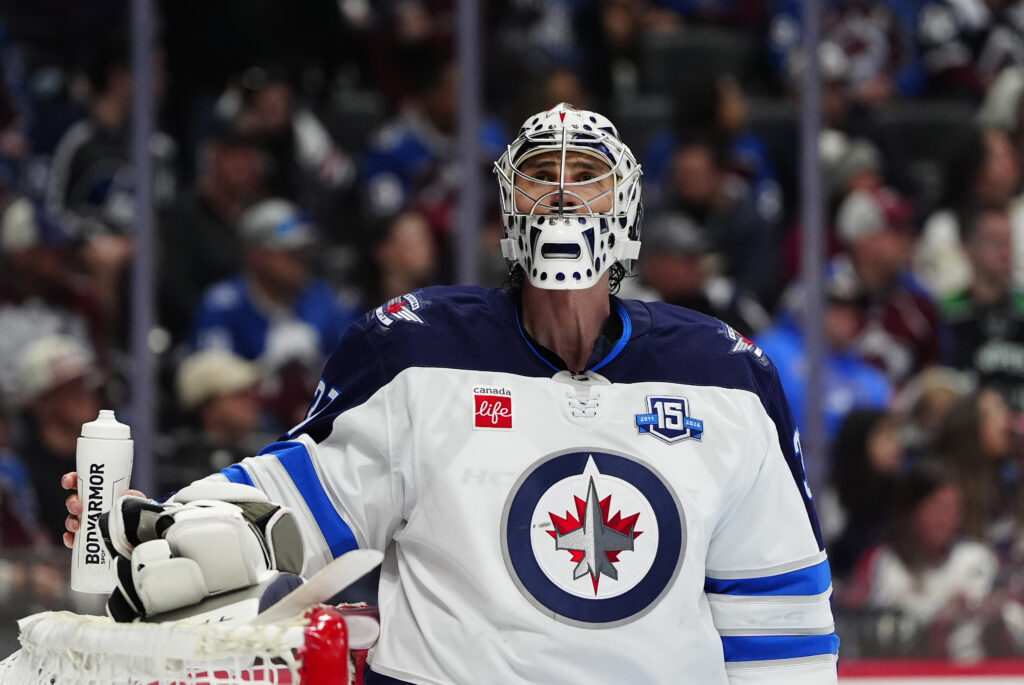
A player who seems less likely to be moved in September, despite a pending trade request, is Winnipeg Jets goalie Connor Hellebuyck. The three-time Vezina Trophy winner will be a very difficult trade for the Jets to make, given his long resume of success and his poor play last year.
Winnipeg is unlikely to get full value for the former Hart Trophy winner unless they can find a team desperate enough to pay full price. That’s not going to happen after a few games of training camp and is more likely to occur deeper in the season if teams realize they have a potential Stanley Cup contender without a solid goaltending option.
The Edmonton Oilers were in that spot last season before the Tristan Jarry trade and could end up there again this year, along with quite a few other teams that might be making calls on Hellebuyck in the coming months.
Then there is the laundry list of unsigned RFAs, which is very intriguing. Former third-overall pick Adam Fantilli remains unsigned, as does Carolina Hurricanes defenseman Alexander Nikishin.
Both negotiations could become uncomfortable as training camp approaches, and it’s fair to wonder whether either situation turns into a trade. Generally, that isn’t the case, but RFA salaries for young players have exploded this summer, and eventually a team will opt to trade the player rather than overpay.
Finally, there is the wildcard Quinn Hughes, whose situation closely mirrors Karlsson’s in 2018. Like Karlsson, Hughes is less than a year away from UFA status and has all the leverage.
Minnesota paid a steep price to acquire Hughes from the Vancouver Canucks, and it’s unlikely they’ll let him walk for nothing next July. The changing extension rules could affect how this negotiation goes, but you have to wonder whether, if Hughes and the Wild get close, that changes the contract-negotiation dynamic.
The probability of a major Hughes trade in September is low, but it wouldn’t be unprecedented.
Ultimately, September trades are unlike almost every other type of trade. At the deadline, buyers know they’re buyers, and sellers know they’re sellers.
The same is generally true for moves made after Christmas. No team wants to admit in September that it’s selling, and most teams head into camp with a pile of unanswered questions.
At the draft and around free agency, teams usually come off a season that sets the tone for their summer. But in September, teams don’t know what shape their players are in or which prospects had a massive summer of improvement.
All of these considerations are at play and will give teams pause, because they don’t want to disrupt camp or trade a player away and create a hole.
All of this generally makes September a terrible time to try to make a trade, unless it is absolutely necessary to relieve some form of pressure, whether it’s an internal conflict stemming from a bad relationship or a contract situation that can’t carry into the season. All of this is what makes the September blockbuster such a fascinating idea, and one that is incredibly rare, but could come soon.
It’s unlikely we’ll see another week like the Karlsson/Pacioretty trades of 2018, but a meaningful move could happen before October 1.